




There is a quiet assumption in many organizations: If someone has enough experience, enough tenure, enough intelligence — they will naturally evolve into the level of leadership the organization needs. But that assumption is no longer true. Complexity has outpaced experience. Today’s leaders operate in environments defined by speed, ambiguity, cross-functional interdependence, stakeholder scrutiny, and constant change. The skills that built their success often become the very behaviors that limit their impact at the next level.
Operational excellence does not automatically translate into enterprise leadership. And that is where leadership work truly begins.

The Gap No One Talks About
In my work with CEOs, executive teams, and senior leaders over the past 20+ years, I see a consistent pattern: Leaders are capable. They are committed. They are intelligent and driven. Yet organizations stall. Because leadership systems are misaligned. Strategy exists, but it does not cascade. KPIs are tracked, but they do not drive behavior. Teams meet, but they do not function as strategic units. Leaders are busy but not always operating at the right level. The issue is rarely effort. It is architecture. Leadership Is a System — Not a Trait We often treat leadership as a personal attribute: charisma, presence, confidence. But sustainable performance comes from something deeper: clarity of role, alignment of priorities, accountability structures, shared operating rhythms, and courageous conversations. Organizations perform at the level of their leadership systems.
One of the most common transitions we support is helping leaders move from tactical excellence to enterprise leadership.
This shift requires letting go of control to gain influence, thinking beyond functional expertise, strengthening cross-boundary collaboration, operating with strategic restraint, and building leaders beneath you. It is not a small shift. It is a structural one. And it rarely happens by accident.
Our approach is structured, measurable, and business-grounded — shaped by my early career in finance and operations as much as my advanced work in human and organizational development and change management consulting.
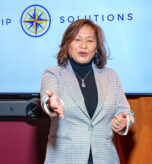
Terry Britton – CEO, Leadership Solutions
What Leadership Solutions Means
When I founded Leadership Solutions LLC, it was grounded in a simple belief: leadership can be developed intentionally. Over the years, my work has evolved beyond coaching conversations into something more comprehensive — integrating executive coaching, leadership architecture, and structured development. Today, we partner with CEOs and senior leaders navigating complexity and growth, executive teams aligning strategy to execution, organizations undergoing transformation, and high potential leaders preparing for broader scope.
Our approach is structured, measurable, and business-grounded — shaped by my early career in finance and operations as much as my advanced work in human and organizational development and change management consulting. I help leaders build systems that sustain performance.
What Do You Need?
Leadership is too important to leave to chance. It deserves clarity, discipline, and intention. If you are leading at an inflection point — or preparing to — I invite you to stay in the conversation. We can explore what it really means to operate at the enterprise level, why executive teams stall, how strategy translates into execution, the hidden patterns that limit high-performing leaders, and the architecture behind sustainable culture.
Because experience alone is no longer enough.
Intentional leadership is.